English
 español
 العربية

In the international trade of air conditioners, importers usually face a vital decision: to import whole units (CBU) or parts to assemble (SKD/CKD)? This not only influences cost structure but also relates to the customs tax, brand strategy, and market competitiveness. The article is to clarify this issue from the perspective of business.
"CBU" (completely built up or completely built unit) means products from the factory are complete units and sold directly.
Features:
Fully completed production and test;
Ready to install and use;
High level of standardization.
Advantages:
Easy operation, no need to assemble again;
Stable quality (central quality control by the factory);
Quick entrance to the market;
Fewer quality issues.
Disadvantages:
High import tax normally;
Limited space for branding distinctiveness;
Less profit space.
Suitable partners:
Newly established importers;
Distributors and contractors;
Small batch of trial orders.
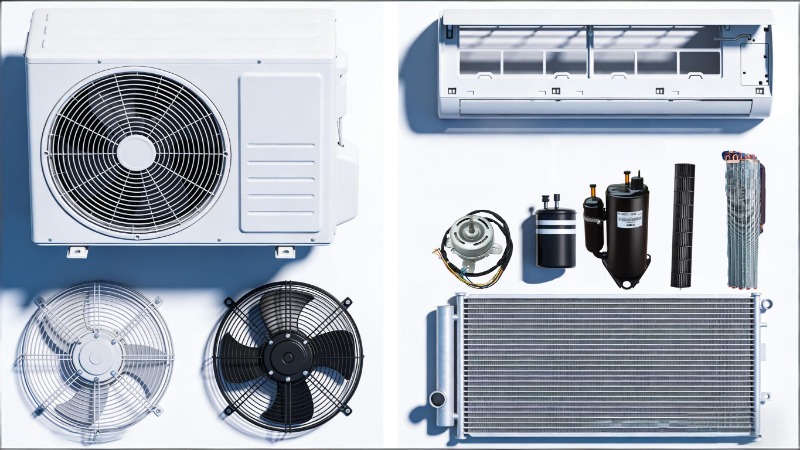
SKD: Semi Knocked Down;
CKD: Completely Knocked Down.
Features:
Accessible to assemble in destination countries;
Available to design and produce locally.
Advantages:
Low importing tax (governmental support on local assembly);
High-profit space;
Access to build local brands;
Access to get political support (such as a tax discount).
Disadvantages:
It requires a factory and assembly lines;
The quality requires local management;
High initial investment.
Suitable partners:
Importers with local resources;
Buyers pursue branding;
Companies with long-term market strategies.
Middle East (e.g., KSA/UAE)
Recommend: SKD/CKD;
Tax policies support local assembly;
High demand of air conditioning units;
Suitable for building a long-term brand.
Africa (e.g., Nigeria/Kenya)
Recommend: SKD and CBU combination;
Early stage: Complete units entering the market first;
Late stage: Convert to SKD to lower the cost.
South America
Recommend: CKD;
Complex tax policies;
Local assembly is more advantageous.
Europe
Recommend: Complete units;
Complex certification policies;
Much stress on product consistency.
As an export-oriented manufacturer, KRG provides:
Complete bult units supply;
SKD/CKD solutions;
Multiple certificates (CE/GCC/SASO/ISO);
OEM/ODM branding;
Various market adaptations (220V60Hz, 110V60Hz air conditioners, T3, R290, Inverter, etc.)
We can help customers convert from importers into brand owners.
When there are signs below, you will need to take actions:
Increasing purchasing demand year by year;
Tax occupies large portion of total cost;
Eager to build a self-owned brand;
Able to assemble locally.
There's not a business model that's absolutely better, but a strategy more suitable for your market. It is not recommended to go "all in SKD" and "stop in complete units." The best way is to start with complete units, transit with SKD, and finally build local brands.


Copyright @ 2026 GUANGZHOU SOUXIN APPLIANCES CO., LTD All Rights Reserved.
 Network Supported
Sitemap / Blog / Xml / Privacy Policy

Hi! Click one of our members below to chat on