English
 español
 العربية

During the selection and use of air conditioners, most people only concern themselves with the cooling capacity, energy efficiency, and the brand but omit a key factor—the climate conditions. Actually, temperature, humidity, altitude, and even the dusty environment will transparently influence the cooling performance, energy efficiency, and lifespan of air conditioners. As for the air conditioner importers, engineering contractors, and large project purchasers, understanding the relationship between the climate and the air conditioner performance is the vital basis for choosing proper equipment.
In hot areas, such as the Middle East, Africa, or South Asia, the temperature in summer normally exceeds 45℃. Under such conditions, the outdoor unit needs to bring heat from indoors to a hotter outside, which apparently lowers the heat exchange efficiency.
The influences mainly include:
Decreased cooling ability: The higher the ambient temperature, the more burden the compressor loads.
Increased energy consumption: The air conditioner will take more time to reach the set temperature.
Increased compressing pressure: Long-term operation under such conditions may shorten the lifespan of the equipment.
In case of that, for the high-temperature regions, many engineering projects will choose T3 air conditioners with resistance to high temperatures (about 52℃). These air conditioners have larger condensers with a wider heat-exchange area and higher-performance compressors. That's why the same 18000BTU split air conditioner in a tropical region will have a higher standard with higher cooling performance as well as a higher unit price.
In Southeast Asia, South America, and coastal regions, high humidity is common there. The air conditioners will cool the air temperature and dehumidify the air.
Influences of humidity on air conditioners include the following:
Increased burden for cooling: The air conditioners shall deal with visible heat and potential heat.
Dehumidity ability is needed: The evaporator needs to be designed for higher efficiency.
More condensate: The drainage system needs to be more reasonable.
If the air conditioner has poor dehumidity ability, the users will feel muggy, sticky, and uncomfortable even if the temperature is not high. So the size of the evaporator and the design of airflow are important for high-humidity areas. Our KRG split air conditioners have dehumidification mode in all capacities; please inquire with us for more details.
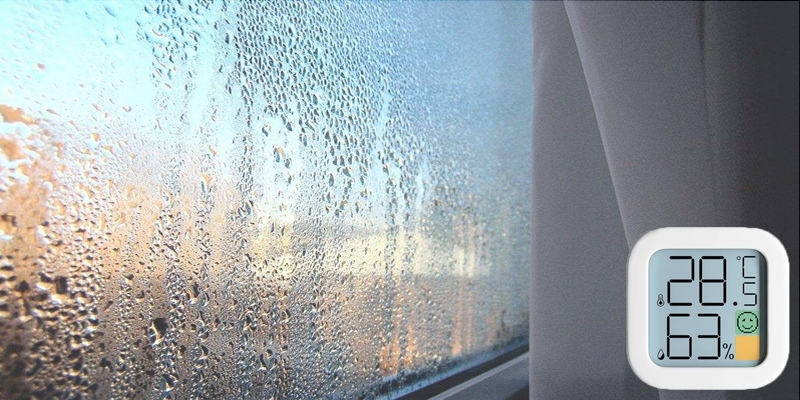
In cold areas, air conditioners will face challenges when using a heat pump for heating due to the frosted outdoor unit.
When the outside temperature is low and the humidity is high:
The surface temperature of the outdoor unit heat-exchanger is lower than 0 ℃.
The steam in the air will frost on the heat exchanger.
The frost will affect the heat-exchange efficiency.
At this moment, the air conditioner will defrost automatically:
Stop heating temporarily.
Reverse to operate heating to defrost.
Back to normal heating
If the control of defrosting is unstable, then:
The indoor temperature will fluctuate.
The heating efficiency will decrease.
The energy consumption will increase.
In parts of the desert or dusty areas, air conditioners need to face the dust pollution problem.
The dust will lead to problems below:
Blockade on condenser,
Decreased efficiency on heat exchanger,
Increased load on the fan motor.
To solve these issues, we can:
Densify the fin structure of the condenser,
Paint an anti-rust coating.
Change designs into portable and washable parts.
We are a professional air conditioner manufacturer; we can customize the product according to the client's specifications.
In high-altitude areas (such as parts of South America, Africa, and Central Asia), the air density is low, which also influences the air conditioning system.
This will mainly influence:
Lower heat-exchange efficiency on condenser,
Higher discharge temperature on compressor,
Lower working efficiency on the fan motor.
Normally, the air conditioning efficiency will start to decrease when the altitude exceeds 1000 meters. Under such circumstances, we may need to change a larger condenser and increase the size or heating capacity of the equipment.
Air conditioners are not a "globally standardized" product. The climate conditions directly determine the design, configuration, and performance of the air conditioning system. When we are selecting air conditioners for projects or purchasing wholesale, we must consider the local climate environment besides the price and brand. Only the products that suit the local climate conditions shall truly achieve a better cooling experience, lower operation cost, and longer lifespan.


Copyright @ 2026 GUANGZHOU SOUXIN APPLIANCES CO., LTD All Rights Reserved.
 Network Supported
Sitemap / Blog / Xml / Privacy Policy

Hi! Click one of our members below to chat on