English
 español
 العربية


Air conditioners are frequently used home appliances for long operation periods. No matter if they are wall mounted split air conditioners, floor standing ac units, or commercial ones used in shopping malls and office buildings, under frequent maintenance, the air conditioners will keep a long-period lifespan, stable cooling/heating performance, and reduced energy consumption and failures.
For some air conditioners with malfunctions in 3-5 years, it is not the issue of the quality but the daily application and maintenance habits.
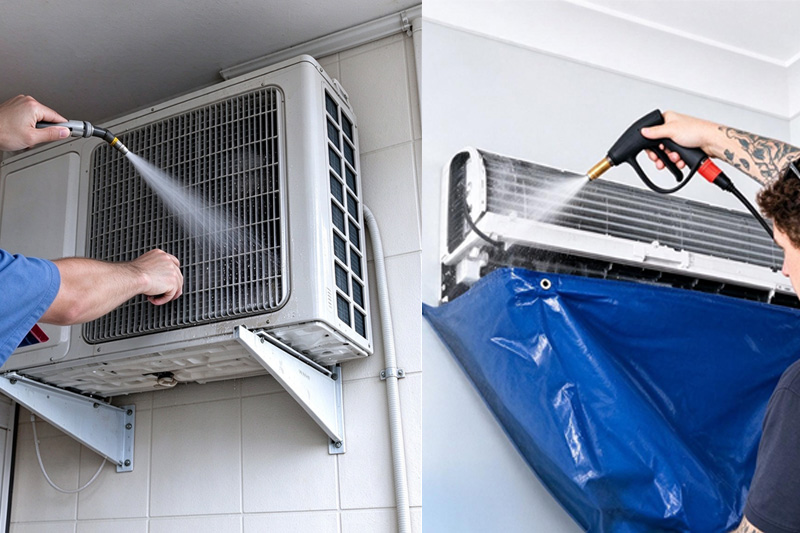
I. Regular cleaning—fundamental and important
Note: It is recommended to arrange for a professional technician for deep cleaning and disassembling cleaning.
II. Standardize usage habits and reduce the compressor burden.
The compressor is the core part of an air conditioner, as well as the most expensive part, and is highly susceptible to damage from frequent start-ups or overloading. Bellow are suggestions during operation:
III. A proper installation site
For an air conditioner, 30% duty lies on the quality, while 70% is on the installation. Potential risks in installation will develop into malfunctions finally.
IV. Stop using in seasonal transition with maintenance.
Many people shut off the air conditioner only during seasonal transitions. Actually some simple steps can protect the air conditioner as well:
V. Regular inspection and maintenance
Refrigerant pressure: The leak of refrigerant is common, and a lack of refrigerant will lead to poor cooling performance, compressor overheating, and even damage. Charging the refrigerant is needed but not blindly; check leakage in advance.
Piping and insulation: Broken insulation on connecting pipes will lead to frost, decrease of cooling capacity, and aging of the piping work.
Electrical wiring and capacitor: The aging of capacitors is a common issue for air conditioners. Changing it in advance will avoid sudden shut-offs and the damage of the compressor.
Inspect the strange noise and shaking: Fix it by tightening it.
The standard lifespan of an air conditioner is designed to be 8-10 years. With better maintenance, many air conditioners can operate for more than ten years. The core is to reduce the compressor burden, keep the condenser clean and well-ventilated, provide a stable power supply, and timely fix small malfunctions. The maintenance is not a complex project; instead, it stresses continuity. Well-maintained air conditioners not only extend the lifespan of the air conditioner but also save energy and provide healthier air.
FAQ
Q1: How many years can an air conditioner typically function normally?
A1: The typical design lifespan of residential air conditioners is 8 to 12 years; with consistent adherence to proper maintenance, many models can operate reliably for around 15 years. Conversely, prolonged neglect of cleaning and operation under harsh conditions may lead to frequent failures within approximately 5 years.
Q2: How often is it appropriate to clean an air conditioner?
A2: The air filter should be inspected and cleaned every 2–4 weeks. The indoor evaporator, drain pan, and outdoor heat exchanger should undergo a thorough cleaning once per season (before startup or after shutdown). In environments such as commercial spaces, dusty areas, or places with heavy cooking fumes, cleaning frequency should be increased.
Q3: Does the outdoor unit require maintenance? What aspects of the outdoor unit primarily need maintenance?
A3: It is critically important. The outdoor unit serves as the core heat dissipation component; ensure its surroundings remain clear of obstructions and that the fins stay free of dust accumulation. Avoid forcefully spraying water onto the circuit board. Regularly inspect the mounting brackets and refrigerant lines for signs of corrosion or refrigerant leaks.
Q4: Does the air conditioner need to be unplugged when not in use?
A4: For extended periods of seasonal inactivity (e.g., not using cooling during winter), it is recommended to disconnect the power supply. The motherboard continues to draw power even in standby mode; prolonged connection can accelerate the aging of electronic components.
Q5: Can the air conditioner continue to operate if it makes unusual noises, leaks water, or emits strange odors?
A5: It is not recommended to continue using this equipment for an extended period. This is a fault warning; forcing operation may cause minor issues to escalate into major failures such as compressor burnout. The unit should be shut down immediately for inspection and repair.
Q6: What temperature setting is more gentle on the air conditioner and also saves electricity?
A6: It is recommended to set the cooling temperature around 26°C; avoid setting it as low as 16°C or 18°C. Excessive temperature differences cause the compressor to operate at high load continuously, leading to faster aging.


Copyright @ 2026 GUANGZHOU SOUXIN APPLIANCES CO., LTD All Rights Reserved.
 Network Supported
Sitemap / Blog / Xml / Privacy Policy

Hi! Click one of our members below to chat on